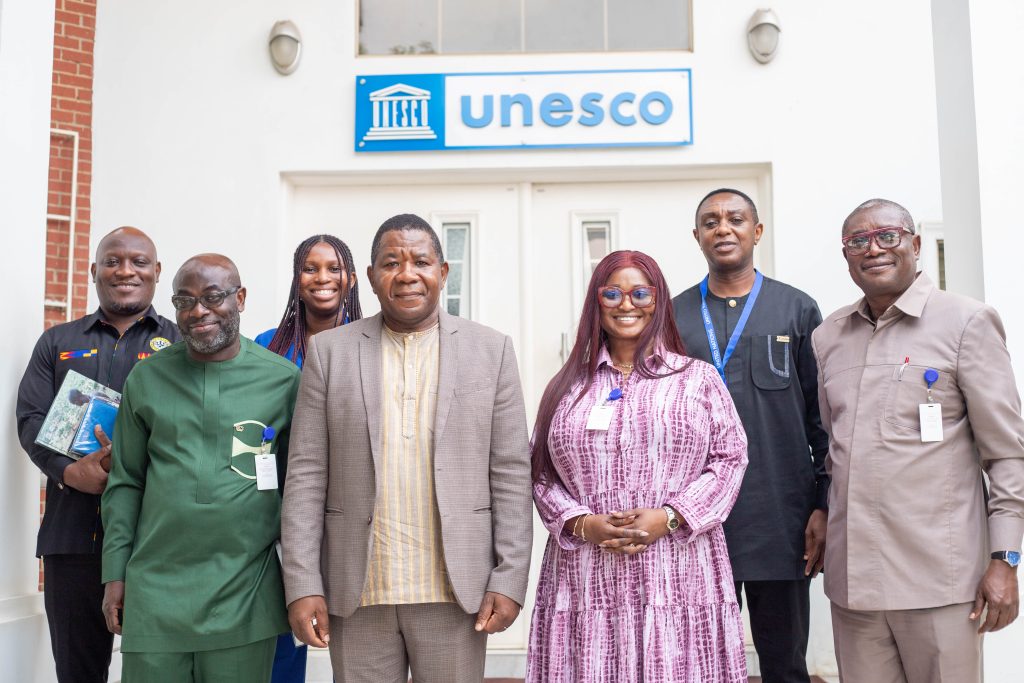
The Chief Executive Officer of the Ghana Tourism Authority (GTA), Maame Efua Houadjeto, yesterday paid a strategic working visit to the Accra Office of the UNESCO, where she held high-level discussions with Edmond Moukala, Head of Office and Representative of UNESCO to Ghana.
The meeting, held at the UNESCO Office in Accra, focused on strengthening institutional collaboration in the promotion of culture and education, as well as exploring how Artificial Intelligence (AI) can be leveraged to boost Ghana’s tourism development and global competitiveness.
Aligning Culture and Tourism for Sustainable Development
Discussions centered on practical strategies to deepen cooperation between GTA and UNESCO in safeguarding Ghana’s cultural heritage while positioning it as a viable economic asset. Both institutions acknowledged that culture remains one of Ghana’s most powerful soft power instruments and a strategic pillar for inclusive growth.
Speaking during the engagement, the CEO of GTA, Maame Efua Houadjeto, underscored the importance of synergy:“Tourism and culture are inseparable.
Ghana’s heritage is not just a memory of the past; it is a powerful economic engine for the future.
Strengthening our collaboration with UNESCO allows us to harness culture, education, and innovation—particularly AI—to drive sustainable tourism growth.”
She emphasized that integrating AI into destination marketing, visitor experience management, data analytics, and digital storytelling would position Ghana ahead of the curve in a rapidly evolving global tourism landscape.
Education and Innovation as Catalysts
In his remarks, Edmond Moukala, Head of Office and Representative of UNESCO to Ghana, highlighted UNESCO’s commitment to supporting member states in advancing education, science, culture, and communication for sustainable development.
Established in 1945, UNESCO works globally to safeguard cultural and natural heritage, promote quality education, foster scientific cooperation, and encourage intercultural dialogue. Through initiatives such as the World Heritage Programme and Education for Sustainable Development frameworks, the organization supports countries in translating heritage preservation into socio-economic impact.
Mr. Moukala noted:
“Ghana has immense cultural capital. The opportunity lies in connecting heritage, education, and emerging technologies to create sustainable value. UNESCO stands ready to support Ghana in protecting its heritage while embracing innovation to enhance tourism management and knowledge sharing.”
The discussions further covered youth engagement, digital documentation of heritage assets, curriculum integration to build tourism awareness, and sustainable site management approaches aligned with global standards.
Symbolic Presentation
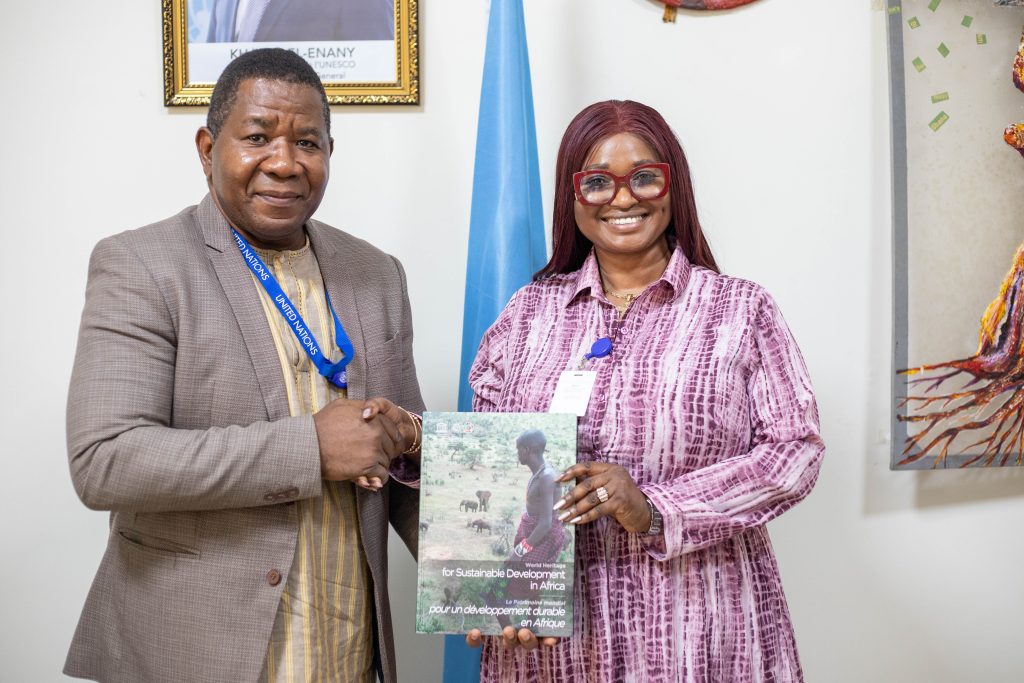
At the close of the productive engagement, Mr. Moukala presented a copy of the book titled World Heritage for Sustainable Development in Africa to the CEO of GTA — a symbolic gesture reflecting the shared commitment to ensuring that Africa’s heritage becomes a foundation for sustainable economic transformation.
Strong GTA Representation
The CEO was accompanied by:
The Deputy CEO in charge of General Services, Ben Anane Nsiah
The Deputy CEO in charge of Operations, Ekow Sampson
The Director of Corporate Affairs, Bright Asempa Tsadidey
Their presence underscored the strategic weight GTA places on partnerships that elevate Ghana’s cultural and tourism agenda on the global stage.
A Forward-Looking Partnership
The engagement reaffirmed the Ghana Tourism Authority’s commitment to building robust international collaborations that leverage culture, education, and innovation as engines of national development.
As Ghana strengthens its positioning as a leading tourism destination in Africa, partnerships with institutions such as UNESCO remain critical in transforming heritage into measurable economic and social impact.